2025
printed enamel plates and wood
80 x 120 x 75cm
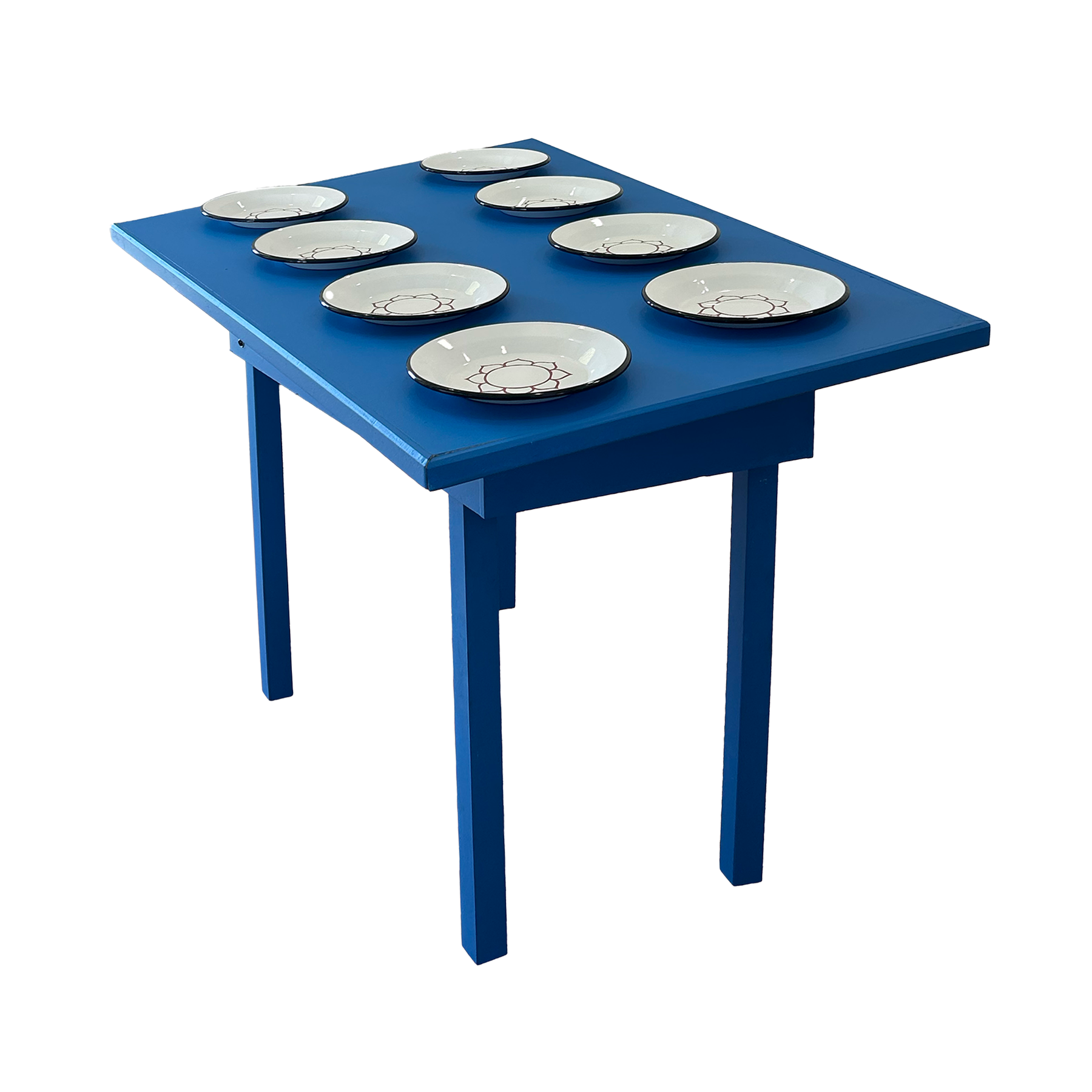
| A familiar symbol of hospitality and gathering, the domestic dinner table is here transformed into a site of subtle unease. The table legs uneven, the surface skewed. Rather than perpetuating an image of warmth and connection, Dinner Table signals an imbalance and an underlying disquiet that lingers beneath the surface façade.
During Sri Lanka’s Southern Uprising, similar tables were reportedly used in interrogation centres as instruments for humiliation and torture. Detainees were served meals on the same enamel plates used to feed stray cats and dogs, collapsing the boundary between human and animal, transforming this apparatus of daily life into one subsequently devoid of humanity. Dheerasekara spent several months working collaboratively at the Bargo Men’s Shed when building this object, a process involving conversation and sharing of personal histories. Working collaboratively becomes a collective act of remembrance, one that brings to light narratives suppressed by the state and, through shared authorship, reaffirms their place within the historical record. Personal memory becomes communal resistance. By reconstructing this object, Dheerasekara reveals how everyday items can betray their unassuming exteriors, bear the weight of complex and traumatic histories, and echo the distortion of historical truth in official, state-sanctioned narratives. (Text: Tia Madden) Made in collaboration with Bargo Men’s Shed (Richard de-Groot, Peter Sutton, Mick Vince and John Wooton) |
 |